
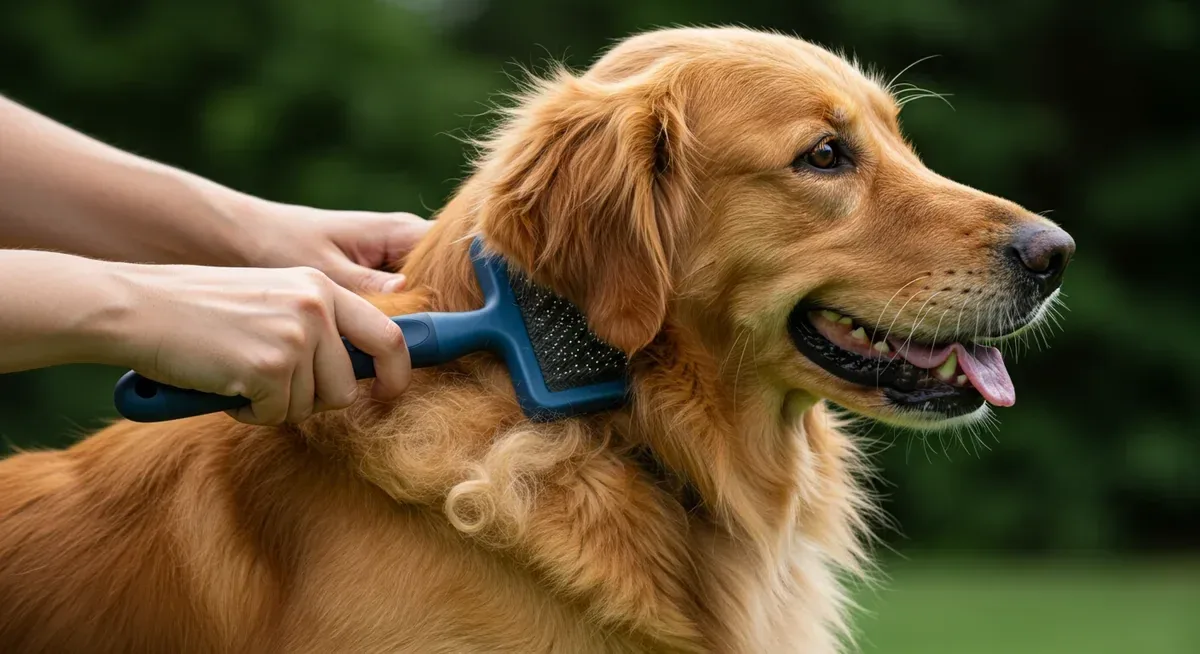
Figuring out how to groom a golden retriever at home saves you money and keeps your dog comfortable. Their double coat traps dead hair against the skin if you skip regular maintenance. That trapped moisture causes painful hot spots fast.
You need a specific workflow to handle it right.
Per the American Kennel Club, goldens require brushing several times weekly to prevent severe matting. A proper home session takes about 30 minutes once you learn the technique. Let us walk through the exact steps to keep that heavy coat healthy.
Quick Answer
Grooming a golden retriever at home requires line brushing their double coat. You must part the hair down to the skin. Brush small sections using a long pin slicker brush.
Finish by running a steel comb through the coat. Bathing only happens after all tangles are fully removed.
Why Your Golden’s Double Coat Needs a Specific Workflow
Golden retrievers have a double coat made of two distinct layers. The top layer consists of water repellent guard hairs. The bottom layer is a dense, fluffy undercoat built for insulation.
Standard surface brushing only touches the top layer.
If you just drag a brush over their back, you leave a wall of dead hair underneath. That packed undercoat traps heat and moisture directly against the skin. Bacterial and fungal infections follow quickly.
Our research shows this is the most common cause of acute moist dermatitis in double coated breeds.
You have to change your approach based on what the season demands. If it is spring or fall, your dog is likely blowing their coat. This means the undercoat sheds in massive clumps over two to three weeks.
You will need an undercoat rake before you even touch a slicker brush.
If it is a normal week outside shedding season, stick to routine maintenance. Line brushing alone handles the loose hair perfectly. Never shave a golden retriever to solve a shedding problem.
Shaving destroys the coat texture and removes their natural UV protection.
The goal is airflow. A properly groomed double coat allows air to circulate down to the skin. That circulation regulates body temperature in both summer heat and winter cold.
Skipping this workflow defeats the entire purpose of their natural coat structure.
The Only Tools That Actually Work on Golden Retriever Hair
Most pet store aisles are filled with tools that damage double coats. You only need four specific items to do this correctly. Buying the wrong brush wastes time and hurts your dog.
| Tool | Purpose | What to Avoid |
|---|---|---|
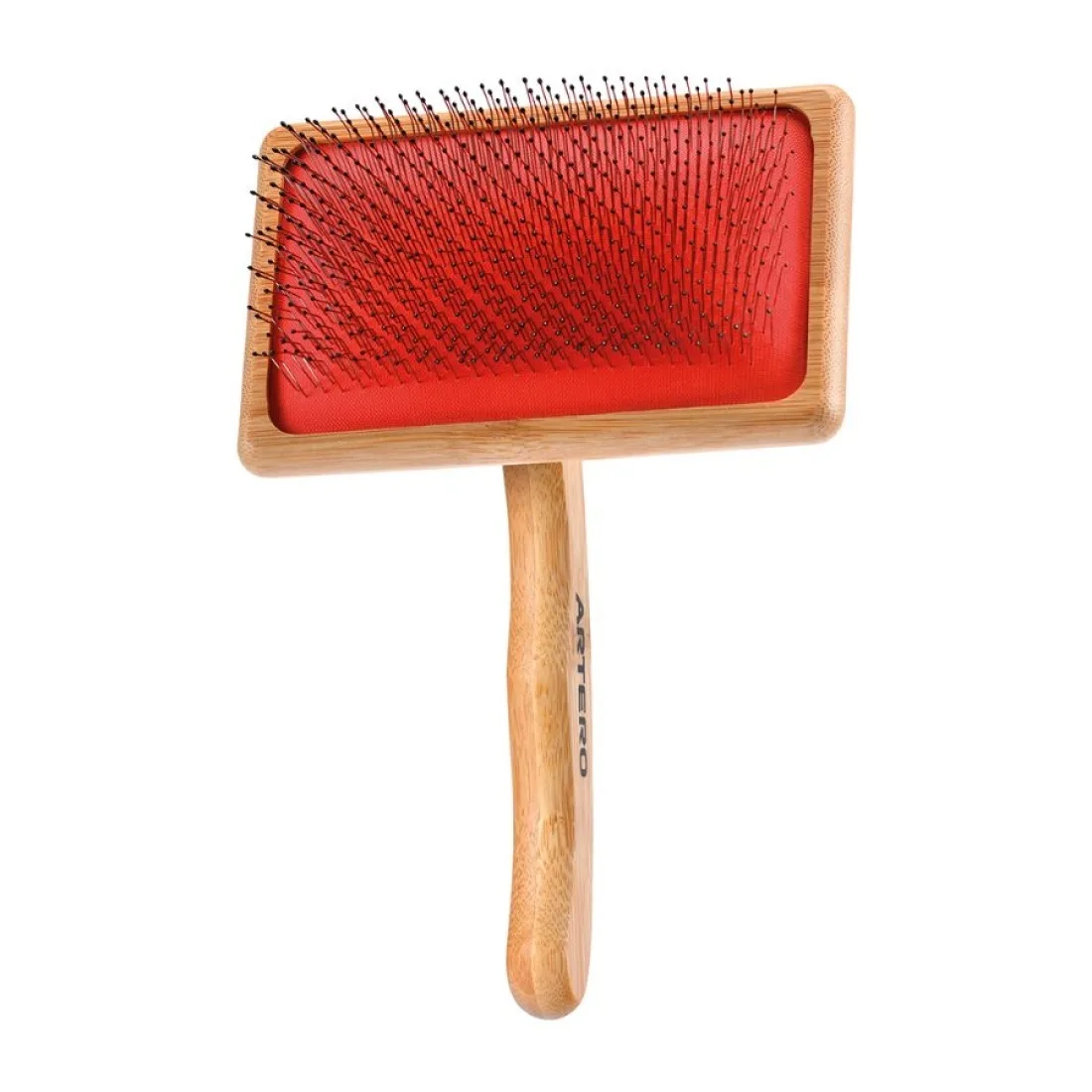
| Long pin slicker brush | Reaches through guard hairs into the undercoat | Short pins that scratch the skin |
| Long toothed undercoat rake | Pulls dead fluff during seasonal blow outs | Bladed deshedding tools that cut guard hairs |
| Steel greyhound comb | Checks for hidden tangles after brushing | Plastic combs that snap under pressure |
| Blunt nosed scissors | Trims paw pads and sanitary areas safely | Pointed shears that risk puncture wounds |
Your slicker brush needs flexible, smooth tipped pins. Stiff pins cause brush burn when dragged across the skin repeatedly. Aggregate user reviews show that long pin models work best for thick feathering on the legs and chest.
Save the undercoat rake strictly for heavy shedding seasons. Using it every single week thins out the protective undercoat too much. You want to remove dead hair, not strip the living insulation.
The steel comb acts as your quality control tool. It does not remove hair. It simply glides through the coat to verify your brushing worked.
If the comb snags, you missed a spot. Go back with the slicker brush.
Keep blunt nosed scissors nearby for functional trimming. Goldens twitch suddenly. Pointed shears turn a quick paw trim into a vet visit.
Thinning shears also help if the leg feathering gets excessively bulky or tangled.
Reading the Coat: Which Grooming Branch to Follow
Before you pick up any tool, run your fingers deep into the coat. Feel all the way down to the skin. Your hands tell you exactly which grooming path to take next.
Do not skip this tactile check.
If the coat feels loose and airy: You are doing routine maintenance. Skip straight to line brushing. The undercoat is clear, and you just need to remove surface dust and minimal loose hair.
If you feel thick, packed resistance: Your dog is blowing their coat. Grab the long toothed undercoat rake first. Work in the direction of hair growth using short strokes.
Let the tool pull the dead fluff without pressing hard into the skin.
If you feel hard, felt like clumps: You found mats. Stop everything. Put the brush away.
Mats usually hide behind the ears, in the armpits, or where the back legs meet the groin. Water makes these worse, so do not plan a bath yet.
Handling mats requires patience. Hold the base of the mat firmly between your thumb and index finger. Pinch it right against the skin.
This stops you from pulling the dog while you work the tangle out.
Use the very tip of your slicker brush to pick at the outer edges. Tease the mat apart bit by bit. If it forms a solid block of felt, use your blunt nosed scissors carefully.
Snip the mat vertically into smaller strips parallel to the skin.
Never chop horizontally across a mat. You will slice your dog. Once the strips are separated, brush them out gently.
Only move to the bathing step after every single mat is completely gone.
The Line Brushing and Bathing Workflow
Line brushing is the core technique for maintaining a golden retriever. Surface brushing leaves dead hair trapped near the skin. Line brushing clears the entire depth of the coat.
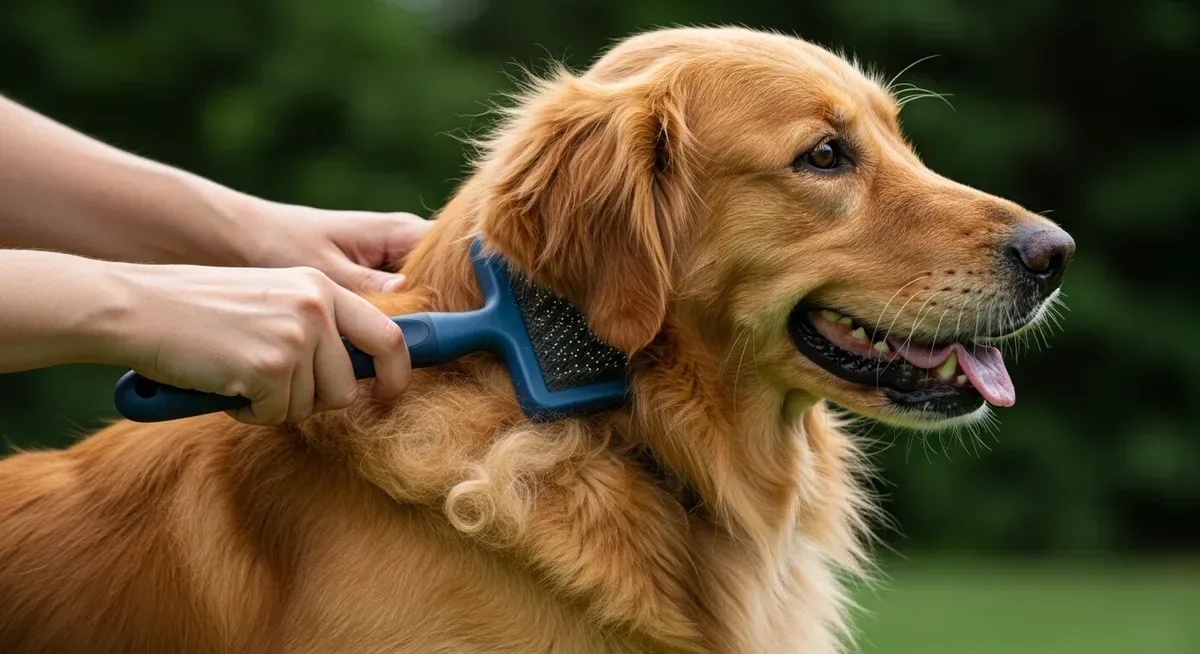
- Lay your dog on their side. Standing works if they refuse, but lying down gives you better access.
- Part the hair with your hand until you see the skin. Create a clear horizontal line.
- Brush the hair below that part line downward. Use gentle strokes moving away from the skin.
- Drop a half inch of hair down to create a new part line. Repeat the brushing motion.
- Start at the bottom of the ribcage. Work your way up to the spine, then flip the dog over.
Run your steel greyhound comb through each section as you finish. The teeth should fall through like gravity is pulling them. Any snag means you left undercoat behind.
Go back over that specific spot with the slicker brush.
Once the entire body passes the comb test, you can bathe the dog. Never put a matted golden into water. Wet undercoat mats tighten into concrete.
You must complete the full brushing workflow first.
Wet the coat thoroughly using lukewarm water. Golden topcoats repel water naturally. You have to physically massage the water past the guard hairs down to the skin.
Dilute your canine shampoo in a cup of water before applying it.
Shampoo twice. The first wash breaks down dirt and sebaceous oils. The second wash actually cleans the hair.
Apply a silicone free conditioner only to the longer feathering on the legs, chest, and tail. Silicone traps dirt and blocks follicles.
Rinse until the water runs completely clear. Leftover residue causes intense itching. Squeeze the water out with a towel instead of rubbing vigorously.
Rubbing creates fresh tangles in wet hair.
Dry the coat using a high velocity dryer on a low heat setting. Point the nozzle a few inches away from the skin. Blow the air against the grain of the hair.
This blasts out remaining loose undercoat while drying the dense layers fast.
Functional Trimming: Paws, Ears, and Sanitary Areas
We are not sculpting a show dog here. Functional trimming keeps your golden clean, safe, and comfortable. Focus entirely on the areas that collect mud or trap moisture.
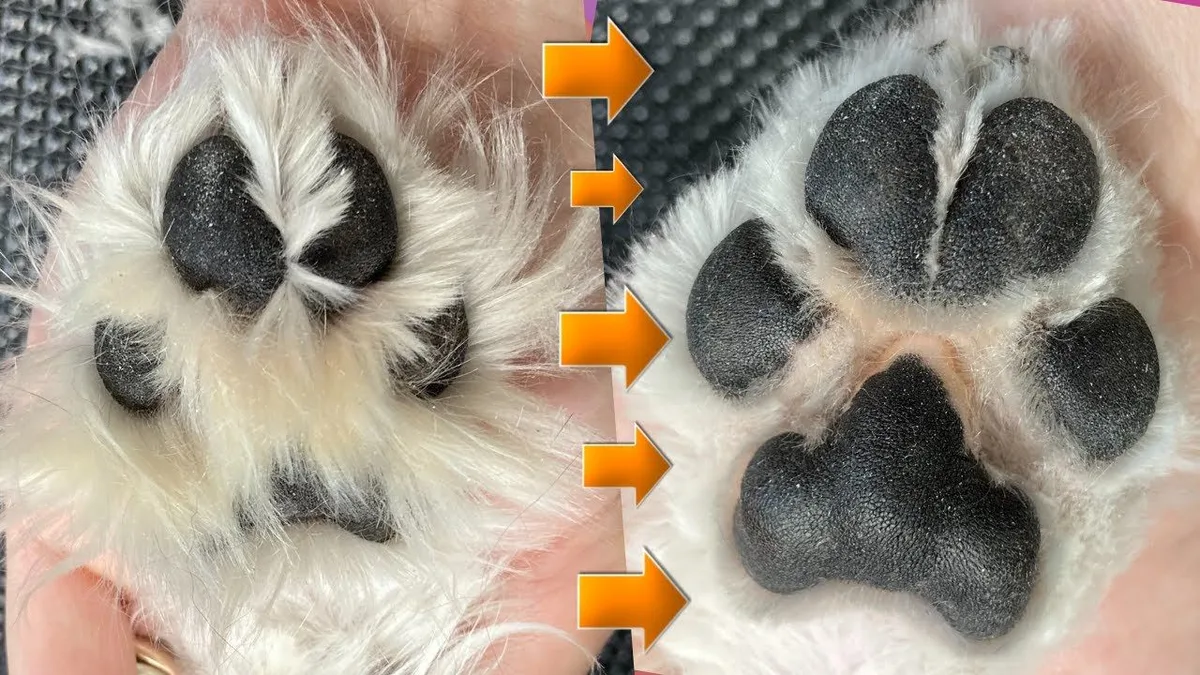
Flip the front paw over to look at the bottom. You will see the tough paw pad leather. Hair grows between and slightly past these pads.
Trim that hair flush with the pad surface using your blunt nosed scissors.
Overgrown paw hair acts like a snowshoe in winter. It packs ice balls between the toes painfully. Indoors, it causes slipping on hardwood floors and tile.
Keep the feet rounded and neat by trimming tufts past the toenails.
Move to the ears next. Golden retrievers have heavy, floppy ears that restrict airflow. This environment breeds yeast and bacterial infections rapidly.
Wipe the inside of the ear flap with a vet approved ear cleaner.
Trim any hair blocking the entrance to the ear canal. Pluck stray hairs carefully if your dog tolerates it. Clearing this space allows air to circulate and dry out residual moisture after baths or rain.
Finish with the sanitary area. Trim the hair around the rear end short. This prevents feces from clinging to the coat.
It is purely hygienic and saves you from messy cleanups later.
If the feathering on the back legs drags heavily in mud, thin it out slightly. Use thinning shears to remove bulk without changing the shape. Do not chop it off completely.
Just reduce the volume enough to keep it manageable between grooming sessions.
Mistakes That Ruin a Golden’s Coat (And How to Avoid Them)
The fastest way to ruin a double coat is shaving it down to the skin. Some owners do this in summer thinking it helps the dog cool off. It actually destroys their natural temperature regulation.
The guard hairs protect against sunburn while the undercoat insulates against heat.
If you shave a golden retriever, the undercoat often grows back faster than the topcoat. This creates a dense, felted mess that traps moisture permanently. Veterinary dermatology research confirms that clipped double coats frequently suffer from post clipping alopecia.
The hair simply stops growing back evenly.
Using bladed deshedding tools is another common error. Tools with sharp cutting edges slice right through healthy guard hairs. You end up thinning the protective outer layer instead of just pulling dead fluff.
Stick to long toothed rakes that grab loose hair without cutting.
Bathing before brushing causes severe matting. Water acts like a shrinking agent on tangled undercoat. If you skip the line brushing workflow we covered earlier, those small tangles turn into solid pelts.
You will have to cut them out later.
Rushing the drying process invites fungal infections. Air drying a thick golden coat takes hours. The dampness near the skin breeds bacteria and yeast rapidly.
Manufacturer specs for high velocity dryers confirm they move enough air to separate wet hair safely. Use low heat and rely entirely on airflow.
Finally, skipping the comb test leaves hidden knots behind. A slicker brush smooths the surface easily. Only a steel greyhound comb reveals what is trapped underneath.
If the comb snags, you are not done brushing yet.
Frequently Asked Questions
How often should you groom a golden retriever at home?
Plan for a 20 to 30 minute line brushing session once a week. Bathing only needs to happen every 6 to 8 weeks unless the dog gets visibly dirty. Functional trims around the paws and sanitary areas work best on a 3 to 4 week cycle.
Can you use a human hair dryer on a golden retriever?
Human hair dryers lack the airflow velocity needed to penetrate a dense undercoat. They rely mostly on heat, which risks burning the skin or overheating the dog. High velocity canine dryers push water out mechanically using strong air pressure rather than high temperatures.
Why does my golden retriever shed so much all year?
Goldens experience two major seasonal blow outs lasting 2 to 3 weeks each. However, indoor climate control disrupts natural shedding cycles. Aggregate reviews from veterinary sources suggest dogs living in temperature controlled homes shed lightly year round instead of dropping everything at once.
Should you trim the feathering on a golden retriever?
Yes, but only for functional reasons. If the leg feathering constantly drags in mud or forms heavy mats, thin it slightly. Use thinning shears to reduce bulk without changing the natural shape.
Never chop it off completely with straight shears.
What causes hot spots on golden retrievers?
Hot spots develop when moisture gets trapped against the skin beneath packed dead hair. Bacteria multiply quickly in that warm, damp environment. Regular line brushing prevents this by ensuring airflow reaches the skin directly.
Keeping the coat clean and fully dried after baths also stops them.

