
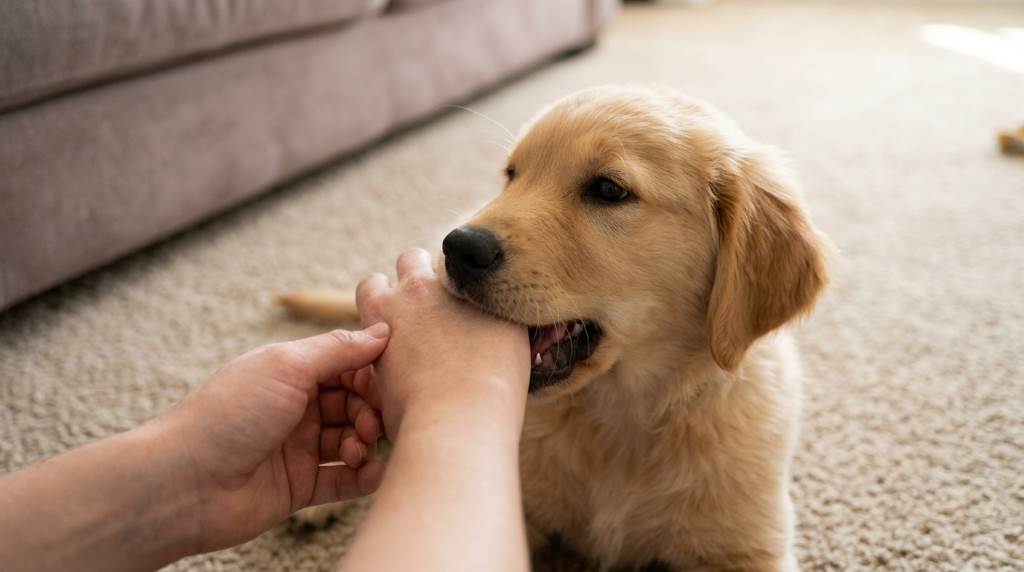
Puppies stop biting hands during play when you consistently redirect biting, reward gentle behavior, and immediately end rough play. Calm training, patience, and daily practice help puppies learn bite inhibition faster while keeping play enjoyable for everyone.
Puppy biting is one of the most common concerns among new dog owners. According to the American Veterinary Medical Association, mouthing is a normal part of puppy development, while studies show that early positive reinforcement training improves long term behavior. This guide explains practical methods that work naturally during everyday play without using punishment or fear.
Understand Why Puppies Bite During Play
Puppies explore the world with their mouths because they cannot use hands like humans. Therefore, playful biting helps them learn about people, toys, and their surroundings while developing social skills.
Teething also increases chewing and mouthing because growing teeth create discomfort. Likewise, proper nutrition supports healthy development, and learning about marine phytoplankton for dogs may help owners understand overall canine wellness alongside behavior training.
Young puppies usually do not understand that human skin feels different from another puppy’s fur. Consequently, they need gentle guidance to recognize acceptable play behavior.
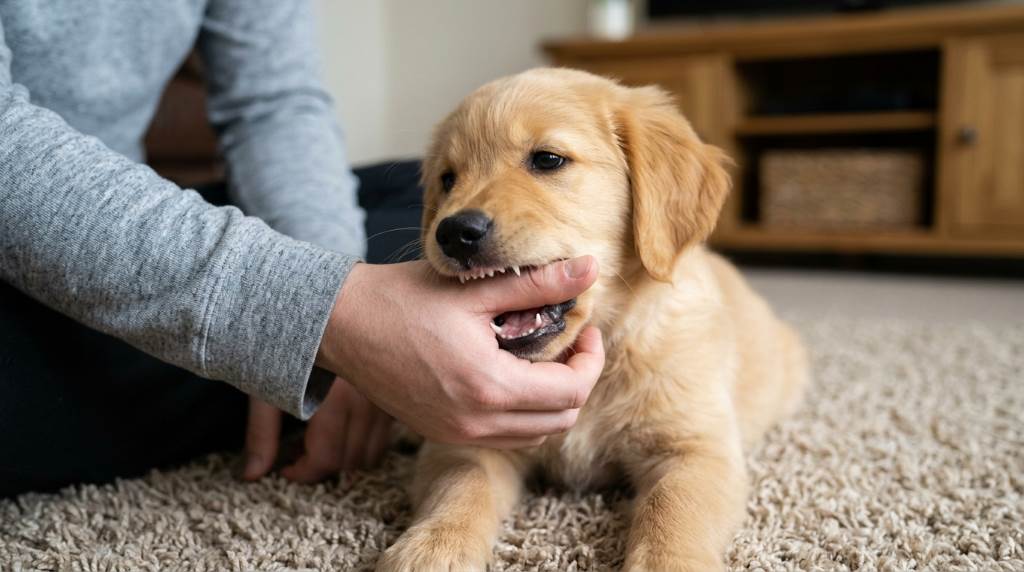
Normal Play Biting Versus Aggressive Biting
Play biting usually appears loose, bouncy, and relaxed with wagging tails and playful movements. However, true aggression often includes stiff posture, intense staring, growling, and repeated attacks.
- Loose body language usually indicates playful behavior.
- Frequent pauses suggest the puppy remains relaxed.
- Hard bites with stiff posture require professional evaluation.
- Most playful mouthing decreases with consistent training.
Teach Bite Inhibition From The Beginning
Bite inhibition teaches puppies to control the pressure of their mouths instead of eliminating natural mouthing immediately. As a result, they learn safer interactions throughout adulthood.
When your puppy bites too hard, calmly say “Ouch” once using a normal voice. Then stop interacting for several seconds before restarting gentle play.
Some owners eventually need extra handling skills for challenging behavior. Meanwhile, understanding how to muzzle train a dog can provide useful knowledge for separate situations involving veterinary visits or safety.
Stay Consistent Every Time
Every family member should respond the same way whenever biting becomes uncomfortable. Otherwise, mixed responses confuse puppies and slow learning.
Consistency builds clear expectations because puppies quickly recognize predictable outcomes. Therefore, they gradually replace biting with calmer behaviors during games.
Redirect Biting Toward Appropriate Toys
Keep several chew toys within easy reach before every play session begins. Then redirect your puppy immediately whenever hands become the preferred target.
Offer a durable toy instead of your fingers without turning the exchange into a chase. Likewise, maintaining healthy routines through take care of your dog at home supports overall behavior improvement.
Rotate toys regularly because puppies lose interest in familiar objects over time. Fresh options encourage better engagement while reducing unwanted hand biting.
Choose The Right Toys
- Rubber chew toys
- Soft rope toys
- Puppy safe teething rings
- Treat dispensing puzzle toys
- Durable plush toys made for puppies
Reward Gentle Play Immediately
Positive reinforcement produces stronger results than punishment for most puppies. Therefore, reward calm behavior the moment your puppy chooses gentle interaction.
Use small treats, praise, or favorite toys after soft mouthing or licking instead of biting. Consequently, your puppy repeats behaviors that consistently earn rewards.
Timing matters because delayed rewards reduce learning effectiveness. Give praise within seconds to strengthen the correct behavior clearly.
Know When To End The Play Session
Excited puppies often lose self control after extended play sessions. Therefore, short breaks help prevent biting from becoming excessive.
Stand quietly and remove attention for about thirty seconds after painful bites. Then restart play only after your puppy becomes calm.
Avoid yelling or physical punishment because those reactions often increase excitement or fear. Calm responses create better long term learning experiences.
Prevent Overstimulation Before It Starts
Many puppies bite more frequently when they become tired or overly excited. Therefore, recognizing early warning signs prevents unwanted behavior.
Fast jumping, nonstop zooming, and constant barking often signal overstimulation. Consequently, provide a quiet rest period before behavior worsens.
Regular naps remain essential because growing puppies need significant daily sleep. Adequate rest supports healthy brain development and emotional balance.
Teach Alternative Behaviors
Replacing unwanted behavior works better than simply stopping it. Therefore, teach simple commands during calm moments every day.
Practice commands like sit, touch, leave it, and drop it using rewards. These skills redirect attention before biting begins.
Keep training sessions short because puppies learn best through frequent practice. Five minute sessions several times daily often produce excellent results.
Avoid Common Training Mistakes
Many owners accidentally encourage biting without realizing their actions. Small changes often produce noticeable improvements within several weeks.
- Do not wave hands like moving toys.
- Avoid rough wrestling games.
- Never reward biting with attention.
- Keep household rules consistent.
- Use calm voices during training.
Children should also learn safe play techniques with puppies. Adult supervision protects both children and developing dogs during interactions.
Support Healthy Physical And Mental Exercise
Daily exercise reduces excess energy that often fuels rough play. However, choose activities appropriate for your puppy’s age and breed.
Short walks, scent games, food puzzles, and gentle fetch sessions keep puppies mentally engaged. Consequently, they rely less on biting for entertainment.
Mental stimulation tires puppies effectively without excessive physical strain. Balanced routines create calmer companions throughout the day.
When To Contact A Professional Trainer
Most puppies naturally improve with consistent positive training over several months. However, some situations require additional professional guidance.
Seek qualified help if biting becomes aggressive, causes repeated injuries, or continues despite consistent daily training. Early intervention often prevents larger behavior problems later.
- Bites break the skin regularly.
- Growling becomes increasingly intense.
- Resource guarding develops.
- Family members feel unsafe.
- Progress completely stops after weeks of training.
Conclusion
Learning how to stop puppy from biting hands during play requires patience, consistency, and positive reinforcement rather than punishment. Every gentle interaction teaches valuable lessons that strengthen trust between you and your puppy.
Start practicing these techniques during every play session today. With daily consistency, your puppy will gradually develop better bite control and become a confident, well mannered companion.
Frequently Asked Questions
How long does puppy biting usually last?
Most puppies show significant improvement between four and seven months with consistent training.
Should I yell when my puppy bites my hand?
No, remain calm because yelling often increases excitement or creates fear.
Is puppy biting a sign of aggression?
No, playful biting is usually normal unless accompanied by aggressive body language.
What is the best toy for redirecting puppy bites?
Durable rubber chew toys and puppy safe teething toys work very well.
Can treats help stop puppy biting?
Yes, rewarding gentle behavior encourages puppies to repeat calm interactions.

