
Let's cut right to it: you want to know exactly how much protein does a labrador need daily, and you want a real answer, not a vague "it depends" cop-out. The short version is that a healthy adult Labrador needs roughly 1.5 to 2.5 grams of protein per kilogram of body weight each day, which usually lands between 18% and 25% of their total daily calories.
But here's where most online advice falls short. Labradors aren't just any dog. They have a genetic mutation that makes them chronically hungry, they're prone to obesity, and their growth patterns demand careful nutritional timing.
That means the protein conversation for this breed is different than it is for a Greyhound or a Chihuahua. Per AAFCO (Association of American Feed Control Officials) standards, adult dog maintenance diets should contain at minimum 18% protein on a dry matter basis, while growth and reproduction formulas need at least 22.5%. Those are your baseline numbers.
Now let's talk about what they actually mean for your Lab.
Why Protein Math Matters More for Labs Than Other Breeds
Labradors carry a genetic quirk that sets them apart from most breeds. Around 25% of Labradors have a mutation in the POMC gene, which affects the pathways that regulate appetite and energy expenditure. These dogs don't just act hungry all the time, they genuinely feel hungrier and burn fewer calories at rest.
That means every decision about food, including protein, has outsized consequences for weight management.
Here's the paradox that trips up a lot of owners. High-protein diets are often marketed as the solution for weight control, and for many breeds that works. But Labs are already predisposed to gaining weight, and if you're feeding a high-protein food that's also high in calories, you're solving one problem while creating another.
Our research shows that the real issue for most Labs isn't getting enough protein, it's getting the right amount without tipping into excess calories.
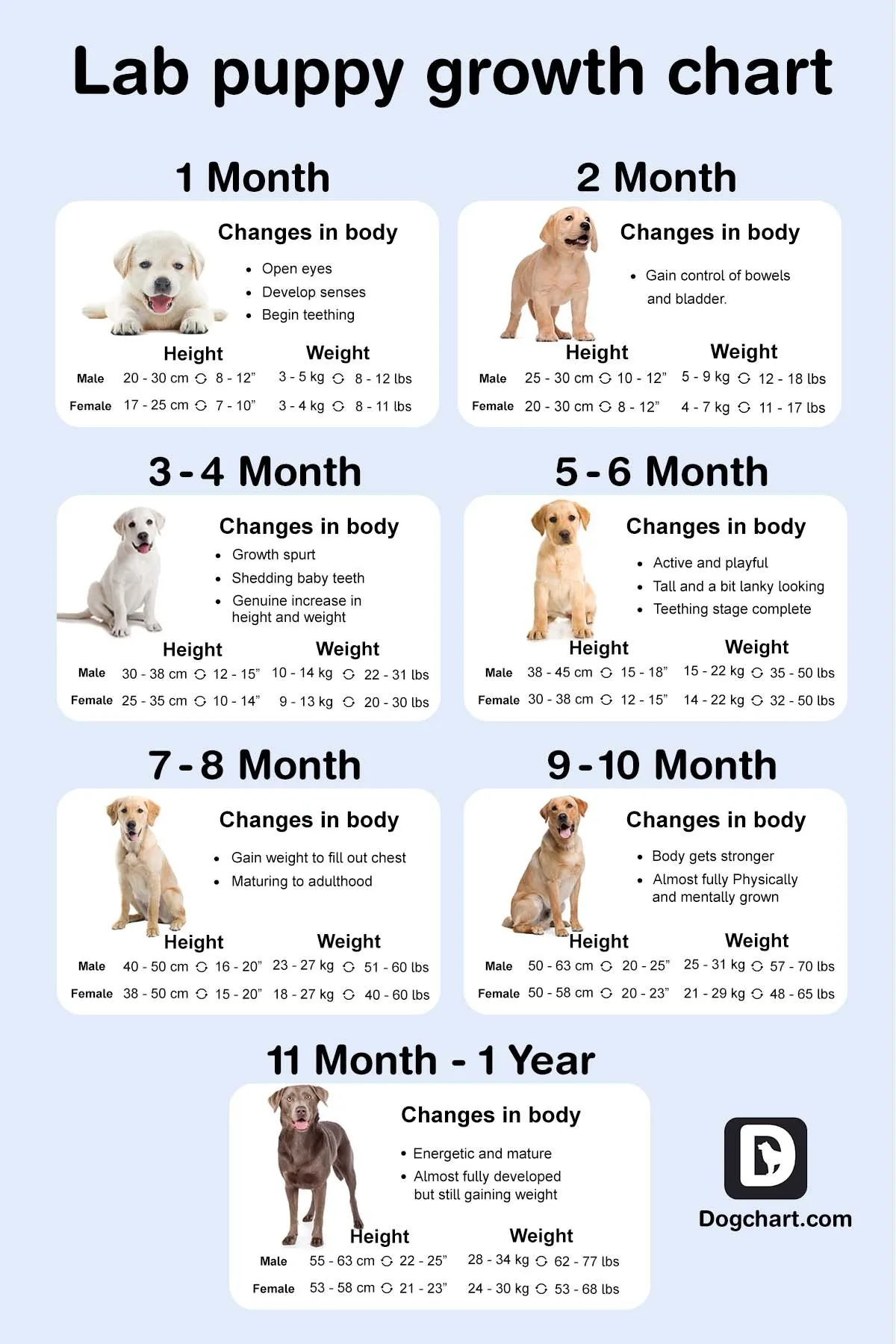
Then there's the growth factor. Lab puppies grow quickly, but they also have a higher risk of hip and elbow dysplasia. Large-breed puppy foods aren't just lower in calcium, they're also carefully balanced for protein.
Too much protein during this rapid growth phase can accelerate growth rates beyond what their developing joints can handle. This is one of the rare cases where more genuinely can cause harm.
Adult Labs, on the other hand, need consistent protein to maintain lean muscle mass. That's especially true for active working dogs, but even the couch potato Lab needs enough to keep their muscles from wasting. The balance is finding a food that meets their protein needs without exceeding their caloric requirements.
The bigger picture is this: Labs are food-obsessed by nature, genetically prone to obesity, and structurally vulnerable to joint issues. Protein matters, but it matters in the context of total calories, food quality, and life stage. The math isn't complicated once you know the numbers, but the context around those numbers is exactly what you're about to get.
The Quick Answer: Protein Needs by Life Stage
If you want a single number to work with, here's the breakdown by life stage based on AAFCO minimums and veterinary nutrition guidelines.
| Life Stage | Protein % (Dry Matter) | Grams per kg Body Weight | Approximate Daily Total |
|---|---|---|---|
| Puppy (8 weeks to 12 months) | 22.5% to 32% | 2.5 to 3.5 grams | 60 to 90 grams for a 25 kg pup |
| Adult (1 to 7 years) | 18% to 25% | 1.5 to 2.5 grams | 45 to 75 grams for a 30 kg Lab |
| Senior (8+ years) | 20% to 28% | 2.0 to 3.0 grams | 50 to 85 grams for a 30 kg Lab |
Let's walk through each stage so you know exactly where your dog fits.
Puppies: Growth changes everything. A Lab puppy's body is building muscle, bone, and organs at a staggering rate. Protein needs are highest per pound of body weight during this window. That said, the quality of that protein matters more than the raw percentage.
A large-breed puppy formula that hits 26% protein from chicken meal and fish is better than a generic puppy food at 30% protein from corn gluten. Your goal is steady, moderate growth, not rapid gains that stress developing joints.
Adults: The maintenance zone. Once your Lab hits their first birthday, protein needs level off. Most quality adult foods sit comfortably in the 20% to 25% protein range, which is perfect. If you're feeding a food that contains at least 20% protein from named animal sources, your Lab is almost certainly covered.
The more pressing concern at this stage is portion control and total calorie intake.
Seniors: More is often better. Conventional wisdom used to say cut protein for older dogs to protect their kidneys. That advice is outdated. Current veterinary research shows that healthy senior dogs actually benefit from higher protein to combat age-related muscle loss, known as sarcopenia.
Unless your vet has diagnosed kidney disease, your senior Lab will likely do better on a food with 22% to 26% protein than on a low-protein "senior" formula.
Reading the Label: What "30% Protein" Actually Means
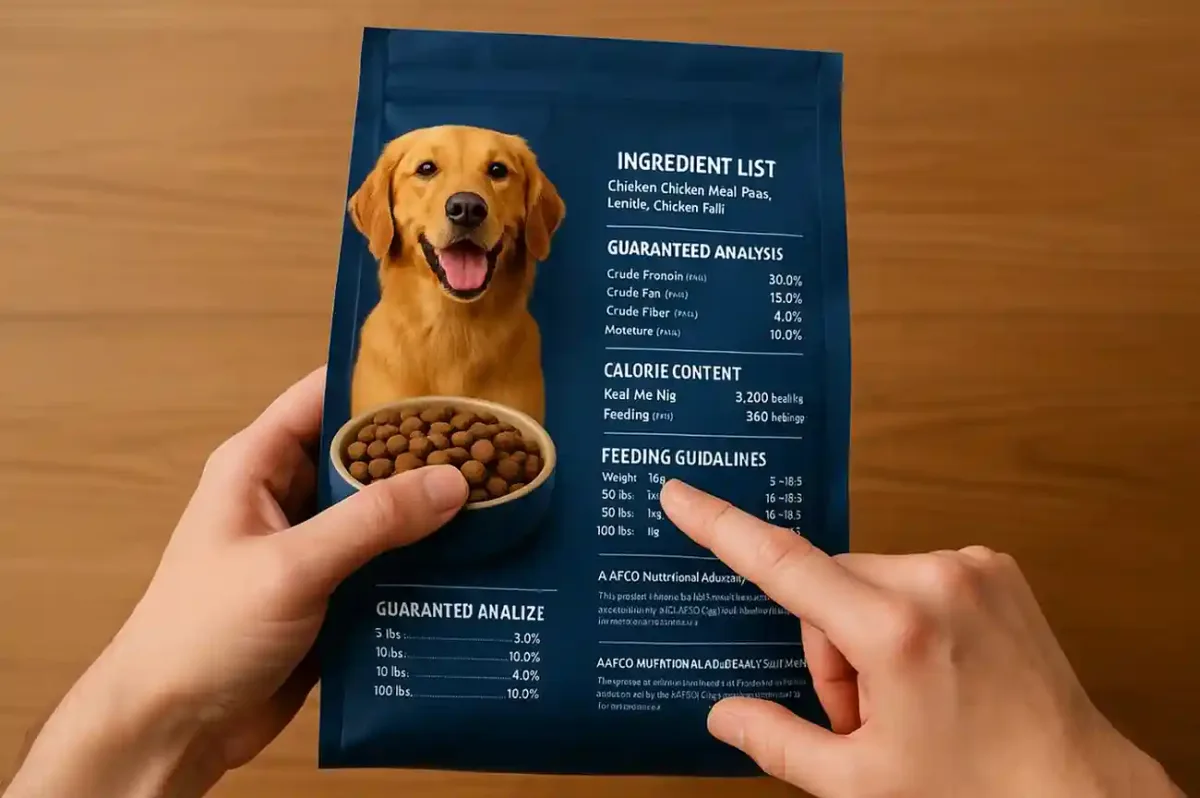
Here's where most owners get tripped up. The big "30% Protein" claim on the front of the bag is only half the story. That number is the crude protein content, which tells you how much nitrogen is in the food, not how much usable protein your dog's body can actually absorb.
The real number you need is digestible protein. A food that says 30% crude protein might only deliver 22% digestible protein if it's built on low-quality ingredients. Meanwhile, a food with 24% crude protein from whole chicken or fish might deliver 22% digestible protein or more.
Understanding pet food labels is one of the most valuable skills you can develop as a dog owner, and it starts with ignoring the front of the bag. Our guide on decoding those labels breaks down exactly what to look for.
Here's what to actually check:
- Named meat proteins first. The first two or three ingredients should be specific animal sources like chicken, beef, lamb, or salmon. "Chicken meal" is actually great because it's concentrated protein. "Meat by-product meal" or "poultry by-product" is where quality gets murky.
- Look for the AAFCO statement. This guarantees the food is complete and balanced for your dog's life stage. It should be on every reputable bag.
- Check the guaranteed analysis. Protein, fat, fiber, and moisture are listed here. Moisture is important because wet foods will show lower protein percentages but might deliver the same amount on a dry matter basis.
- Consider the source digestibility. Animal proteins from muscle meat and organs are highly bioavailable. Plant proteins like corn gluten, soybean meal, and wheat gluten are harder for dogs to digest and provide incomplete amino acid profiles on their own.
There's also a marketing trap worth mentioning. "High protein" is a buzzword that many brands slap on bags to justify premium pricing. In our research, we've found that some 30% protein foods are actually worse for Labs than a well-balanced 22% food, purely because the excess protein comes from poorly digestible sources.
Your dog ends up with more waste, more gas, and less usable nutrition.
Kibble, Raw, or Home-Cooked: Does the Source Change the Number?
Yes, the source absolutely changes the number, and it changes how you should calculate your Lab's daily protein intake.
Commercial kibble is the easiest baseline. The crude protein percentage is printed on the bag, and most reputable brands follow AAFCO guidelines. For a 30 kg adult Lab, a quality kibble in the 20% to 25% protein range is the simplest path to meeting their needs. You don't need to calculate grams per kilogram because the food is already formulated to hit the right ratio when fed at the recommended portion size.
The main risk with kibble is overfeeding portions, not getting enough protein.
Raw diets change the math significantly. Fresh meat has higher digestibility than cooked or processed protein, often in the 85% to 95% range compared to 80% to 85% for quality kibble. That means a raw-fed Lab might need slightly less total protein by weight because their body extracts more from what they eat. A raw diet typically delivers 40% to 50% protein on a dry matter basis, which sounds like a massive jump, but the bioavailability means you're often feeding a smaller total volume.
Raw feeding gives you more control but also more room for error, especially if you're not balancing organs, bone, and muscle meat correctly. If you're considering this route, transitioning your pet slowly is essential for digestive health. We've covered how to make that switch safely elsewhere.
Home-cooked diets require professional input. This is the highest-risk option because it's incredibly hard to hit all the essential amino acids, vitamins, and minerals. Cooking chicken breast alone doesn't provide complete nutrition. Taurine levels can be insufficient, and the calcium-to-phosphorus ratio is often wrong when you're not including bone.
If you're committed to home-cooking, we strongly recommend consulting a board-certified veterinary nutritionist. They can calculate exact amounts based on your Lab's weight and activity level.
To simplify the comparison:
| Diet Type | Typical Protein % (Dry Matter) | Digestibility | Risk Level |
|---|---|---|---|
| Premium Kibble | 22% to 28% | 80% to 85% | Low if portioned correctly |
| Raw/Fresh | 40% to 50% | 85% to 95% | Medium without expert balancing |
| Home-Cooked | Varies widely | Varies widely | High without nutritionist guidance |
How to Calculate Your Lab's Daily Protein Target
Let's turn all this information into a practical calculation you can actually use. You'll need your Lab's current weight in kilograms and an honest assessment of their activity level.
Step 1: Weigh your Lab. Your vet has a scale, but you can do this at home. Step on a scale, then step on it holding your dog. Subtract your weight.
For Labs, you want that number in kilograms. Divide pounds by 2.2 to convert.
Step 2: Choose your multiplier based on activity.
- Sedentary indoor Lab (couch potato): 1.5 to 1.8 grams per kg
- Average family Lab (daily walks, playtime): 1.8 to 2.2 grams per kg
- Working or highly active Lab (hunting, agility, trail running): 2.2 to 2.5 grams per kg
Step 3: Do the math. For a 30 kg average family Lab, multiply 30 by 2.0, which gives you 60 grams of protein per day. For a sedentary 28 kg Lab, you'd multiply 28 by 1.6 for roughly 45 grams.
Step 4: Check your food. Look at the guaranteed analysis on your dog's food. Most bags list protein percentage and feeding recommendations for weight ranges. A 25% protein kibble fed at 350 grams per day delivers roughly 85 grams of protein.
That's on the higher end for a sedentary Lab, which is why many owners actually need to reduce portions, not add protein.
The body condition score is your real-world verification tool, not the number on the bag. You should be able to feel your Lab's ribs easily through a thin layer of fat, but you shouldn't see them prominently at a distance. If you can't feel ribs, your dog is overweight regardless of protein intake.
A proper body condition assessment takes 30 seconds and gives you more useful feedback than any nutritional spreadsheet.

Adjustments should be made monthly, not daily. If your Lab is gaining weight on their current food, reduce calories by about 10% and monitor for two weeks. If they're losing muscle mass or showing a dull coat, consider increasing protein rather than just adding more food.
The right protein intake for your Lab is a moving target that shifts with age, season, and activity level, but this calculation gives you a solid starting point.

